
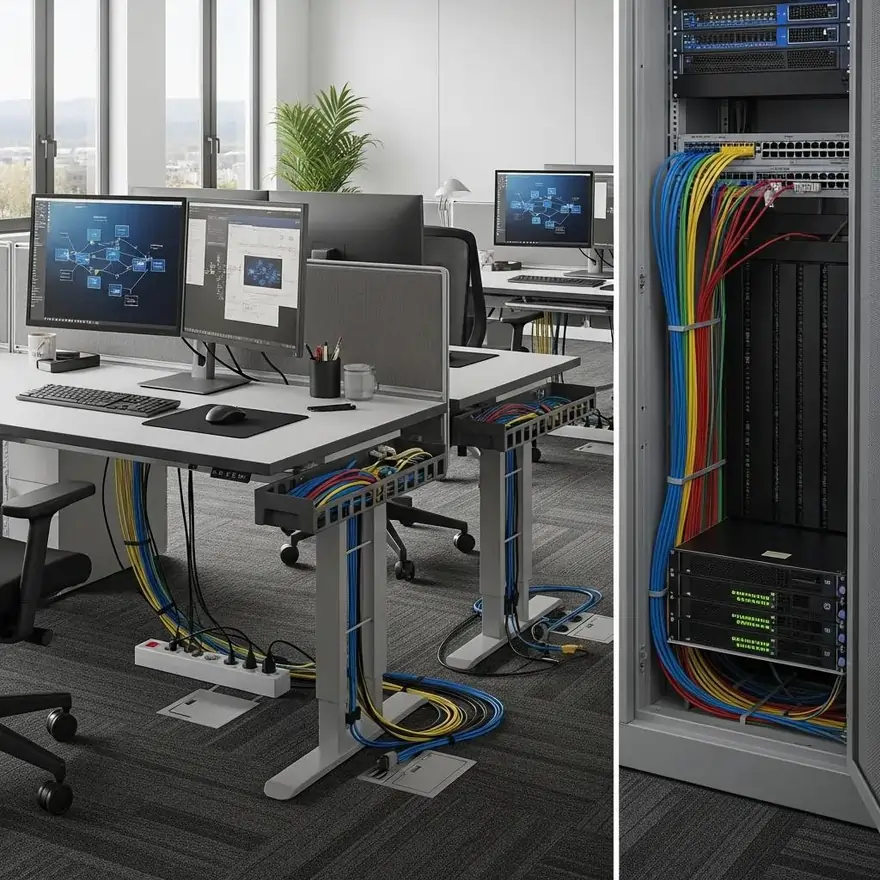
In today’s fast-paced business environment, the need for reliable and efficient network infrastructure is paramount. Structured cabling solutions provide a robust framework that supports various communication systems, ensuring seamless connectivity in modern workspaces. This article will explore the essential aspects of structured cabling, including its benefits, types, and the role it plays in enhancing network performance. As businesses increasingly rely on technology, understanding structured cabling becomes crucial for maintaining operational efficiency and supporting future growth. We will delve into the different types of cabling, the installation process, and how companies like Genconnect Technologies deliver expert solutions tailored to meet the needs of commercial clients.
What Are Structured Cabling Solutions and Why Are They Essential for Modern Workspaces?
Structured cabling solutions refer to a standardised system of cabling and associated hardware that provides a comprehensive telecommunications infrastructure. This system is essential for modern workspaces as it supports various communication needs, including voice, data, and video. By implementing structured cabling, businesses can ensure reliable connectivity, reduce downtime, and enhance overall network performance. The structured approach allows for easier management and scalability, making it a vital component of any contemporary office environment.
How Does Structured Cabling Enhance Network Reliability and Performance?
Structured cabling enhances network reliability by providing a well-organised and efficient framework for data transmission. This organisation minimises the risk of interference and signal degradation, leading to increased uptime and reduced latency. For instance, businesses that implement structured cabling often experience improved performance metrics, such as faster data transfer rates and enhanced connectivity for high-bandwidth applications. This reliability is crucial for maintaining productivity in today’s technology-driven workplaces.
Research consistently demonstrates how structured cabling systems are fundamental to achieving optimal network reliability and performance in high-speed communication environments.
Structured Cabling for High-Speed Network Performance
In this paper a smart model based on high-speed communication network with the help of structured cabling system is proposed to achieve reliable and high performance and receiver with some higher bandwidth optimisation.
The role of integrated structured cabling system (ISCS) for reliable bandwidth optimisation in high-speed communication network, J Logeshwaran, 2022
What Role Does Structured Cabling Play in Supporting High-Bandwidth Applications?
Structured cabling plays a significant role in supporting high-bandwidth applications by providing the necessary infrastructure to handle increased data loads. With the rise of cloud computing, video conferencing, and other bandwidth-intensive services, businesses require a robust cabling system that can accommodate these demands. Case studies have shown that organisations utilising structured cabling can effectively manage high-bandwidth applications, resulting in smoother operations and improved user experiences.
Which Types of Structured Cabling Are Best Suited for Commercial Offices?
When selecting structured cabling for commercial offices, it is essential to consider the specific needs of the business. Various types of cabling are available, each with unique features and benefits that cater to different environments.
What Are the Features and Benefits of Copper Cabling: Cat6, Cat6a, and Cat8?
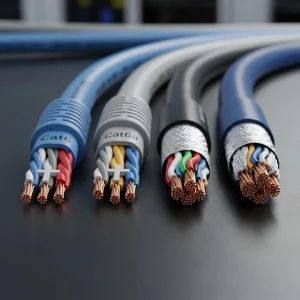
Copper cabling, including Cat6, Cat6a, and Cat8, offers several advantages for commercial offices. These cables are known for their speed and bandwidth capabilities, making them suitable for a range of applications.
- Cat6: Supports speeds up to 1 Gbps over 100 meters (approximately 328 feet), ideal for most office environments.
- Cat6a: Offers improved performance with speeds up to 10 Gbps over 100 meters (approximately 328 feet), suitable for high-demand applications.
- Cat8: Designed primarily for data centers, it supports speeds up to 25-40 Gbps over distances up to 30 meters (approximately 100 feet), ensuring future-proofing for growing businesses.
These copper cabling options provide cost-effective solutions for various office sizes and requirements.
Further studies delve into the specific performance characteristics of advanced copper cabling, particularly for high-speed Ethernet applications.
10G Ethernet Cable Performance: CAT6a, CAT7, CAT8
We investigate the performance parameters of 10G Ethernet over various copper cables, namely CAT6a, CAT7, and CAT8 shielded cable S/FTP, and evaluate their suitability for modern data centers.
Evaluation of 10G Ethernet under various environments, 2024
How Does Fibre Optic Cabling Improve Speed and Scalability in Modern Workplaces?
Fibre optic cabling significantly improves speed and scalability in modern workplaces by utilising light to transmit data, resulting in faster and more reliable connections. Unlike copper cabling, fibre optics can cover longer distances without signal loss, making them ideal for expansive office layouts. Fibre optic connections can achieve speeds ranging from 1 Gbps to 100 Gbps and beyond, which is essential for businesses that rely on high-speed internet and data transfer. Additionally, fibre optic cabling allows for easy scalability, accommodating future technological advancements without the need for extensive rewiring.
How Does Genconnect Technologies Deliver Expert Data Cabling and Comms Cabinet Solutions?
Genconnect Technologies specialises in providing comprehensive data cabling and communications cabinet solutions tailored to meet the unique needs of businesses. Their approach combines expertise in design, installation, and ongoing support to ensure optimal network performance.
What Is the Structured Cabling Installation Process: Consultation, Design, and Planning?
The structured cabling installation process begins with a thorough consultation to assess the specific needs of the business. Genconnect Technologies works closely with clients to design a customised cabling solution that aligns with their operational requirements. This planning phase includes evaluating the existing infrastructure, determining the best cabling types, and outlining the installation timeline. By prioritising client collaboration, Genconnect ensures a seamless installation process that minimises disruption to daily operations.
Understanding the foundational principles of structured cabling design and installation is crucial for successful implementation, as highlighted by industry standards.
Structured Cabling Design, Installation & Standards
The information provided covers the design, specification, installation and testing of structured cabling systems. The information is based on the ISO 11801 standard, cross-referenced to European CENELEC and American standards.
Designing a Structured Cabling System to ISO 11801: Cross-referenced to European CENELEC and American Standards, 2002
How Are Testing, Certification, and Ongoing Support Managed for Network Infrastructure?
Testing and certification are critical components of the structured cabling process. Genconnect Technologies employs rigorous testing protocols to ensure that all installations meet industry standards and function optimally. This includes verifying cable performance, ensuring compliance with safety regulations, and providing certification documentation. Additionally, ongoing support is offered to address any issues that may arise post-installation, ensuring that businesses maintain a reliable network infrastructure.
What Are the Key Benefits of Structured Cabling for Business Network Infrastructure?
Structured cabling provides numerous benefits for business network infrastructure, making it a worthwhile investment for any organisation.
- Scalability for Future Growth: Structured cabling systems are designed to accommodate future expansions, allowing businesses to adapt to changing technology needs without significant additional costs.
- Cost Savings Over Time: By reducing downtime and maintenance costs, structured cabling can lead to significant long-term savings for businesses.
- Improved Workplace Aesthetics: A well-organised cabling system enhances the overall appearance of the workspace, contributing to a more professional environment.
How Does Structured Cabling Support Scalability and Future Growth?
Structured cabling supports scalability by providing a flexible infrastructure that can easily adapt to new technologies and increased data demands. Businesses can implement additional cabling or upgrade existing systems without extensive rewiring, allowing for long-term planning and growth. This adaptability is crucial for organisations looking to stay competitive in a rapidly evolving technological landscape.
In What Ways Does Structured Cabling Improve Workplace Safety and Aesthetics?
Structured cabling improves workplace safety by organising cables and reducing clutter, which minimises tripping hazards and enhances overall safety. Additionally, a clean and organised cabling system contributes to a more aesthetically pleasing office environment. Compliance with safety standards is also easier to achieve with a structured approach, ensuring that businesses meet regulatory requirements.
How Can Structured Cabling Solutions Integrate Emerging Technologies in Modern Workspaces?
Structured cabling solutions are essential for integrating emerging technologies in modern workspaces, enabling businesses to leverage advancements in communication and data management.
What Is the Role of Power over Ethernet in Supporting IoT and Smart Building Devices?
Power over Ethernet (PoE) technology allows network cables to carry electrical power alongside data, simplifying the installation of IoT and smart building devices. This integration reduces the need for additional power sources, streamlining the deployment of devices such as security cameras, access points, and smart lighting systems. By utilising PoE, businesses can enhance their operational efficiency and reduce installation costs.
How Does Structured Cabling Prepare Businesses for 5G, Cloud Computing, and AI Demands?
Structured cabling prepares businesses for the demands of 5G, cloud computing, and AI by providing a robust infrastructure capable of handling increased data traffic and connectivity requirements. As these technologies continue to evolve, having a reliable cabling system in place ensures that businesses can seamlessly adopt new solutions without significant disruptions. This forward-thinking approach positions organisations to take full advantage of technological advancements.
Which Industry-Specific Structured Cabling Solutions Does Genconnect Offer for Commercial Clients?
Genconnect Technologies offers tailored structured cabling solutions for various industries, ensuring that each client receives the most effective infrastructure for their specific needs.
How Are Structured Cabling Solutions Tailored for Commercial Offices and Data Centres?
Structured cabling solutions for commercial offices and data centres are designed to meet the unique requirements of each environment. For commercial offices, Genconnect focuses on optimising space and ensuring efficient data flow, while data centres require high-capacity cabling to support extensive data processing and storage needs. Case studies demonstrate the effectiveness of these tailored solutions in enhancing operational efficiency and reliability.
What Are the Benefits of Structured Cabling for Hospitality and Airbnb Property Management?
Structured cabling offers significant benefits for the hospitality industry, particularly for Airbnb property management. By implementing a reliable cabling system, property managers can enhance guest experiences through improved connectivity and access to smart technologies. Additionally, structured cabling supports operational efficiency, allowing for streamlined management of multiple properties. Scalability is also a key advantage, enabling property managers to adapt to changing demands and technology trends.
| Cabling Type | Speed | Distance | Ideal Use Case |
| Cat6 | 1 Gbps | 100 meters (328 ft) | Standard office applications |
| Cat6a | 10 Gbps | 100 meters (328 ft) | High-demand environments |
| Cat8 | 25-40 Gbps | 30 meters (100 ft) | Data centres and high-speed networks |
| Benefit | Description | Impact Level |
| Scalability | Accommodates future growth | High |
| Cost Savings | Reduces downtime and maintenance | Medium |
| Aesthetics | Enhances workplace appearance | Medium |
In conclusion, structured cabling solutions are essential for modern workspaces, providing the necessary infrastructure to support various communication needs. By understanding the different types of cabling, the installation process, and the benefits they offer, businesses can make informed decisions that enhance their operational efficiency and prepare them for future growth. Genconnect Technologies stands out as a trusted provider of structured cabling solutions, ensuring that clients receive tailored services that meet their unique requirements.